

This can provide the necessary information behind how much liquid funds they could produce in the event that those assets had to be sold. https://www.bookstime.com/ The ordering system is based on how close the payment date is, so a liability with a near-term maturity date will be listed higher up in the section (and vice versa). The liabilities undertaken by the company should theoretically be offset by the value creation from the utilization of the purchased assets. Unlike the assets section, which consists of items considered cash outflows (“uses”), the liabilities section comprises items considered cash inflows (“sources”). Say you make a $200 sale to a customer who pays with credit. Through the sale, you increase your Revenue account through a credit.
- When this happens, you can reasonably estimate the amount of the resulting liability.
- Our intuitive software automates the busywork with powerful tools and features designed to help you simplify your financial management and make informed business decisions.
- Liabilities are classified as current, long-term, or contingent.
- Based on their durations, liabilities are broadly classified into short-term and long-term liabilities.
- Understanding liabilities requires comprehending their classification and measurement.
- These obligations can affect a company’s operating cash flows, as they represent a cash outflow the company will need to satisfy.
Examples of assets, liabilities, and equity
Liabilities, on the other hand, represent obligations a company has to other parties. Financial statements, such as the balance sheet, represent a snapshot of a company’s assets, liabilities, and equity at a specific point in time. Assets and liabilities are treated what account type is considered a liability? differently in that assets have a normal debit balance, while liabilities have a normal credit balance. In conclusion, liabilities play a crucial role in business operations, as they represent the financial obligations a company has to its employees, suppliers, lenders, and other stakeholders. Proper management of these liabilities is essential to ensure smooth business operations and long-term financial health.
Great! The Financial Professional Will Get Back To You Soon.
But what are assets and liabilities and what sets them apart? Below we’ll cover their basic definitions and functions, how they factor into the balance sheet and provide some formulas and examples to help you put them into practice. Notes Payable – A note payable is a long-term contract to borrow money from a creditor. The most common notes payable are mortgages and personal notes. Classification of accounts in the ledgers is needed to create the Financial Statements. If the sale and purchase of assets have been properly recorded, that makes it easier to see asset classifications you need to report on the balance sheet.
- In summary, other liabilities in accounting consist of obligations arising from leases and contingent liabilities, such as lease payments, warranty liabilities, and lawsuit liabilities.
- This formula is used to create financial statements, including the balance sheet, that can be used to find the economic value and net worth of a company.
- Liabilities are settled over time through the transfer of economic benefits including money, goods, or services.
- This can range from money owed to suppliers, as in accounts payable, to long-term commitments like mortgage payable or bonds issued.
- Current liabilities are due within a year, while non-current liabilities are settled over a longer period.
- Michelle Payne has 15 years of experience as a Certified Public Accountant with a strong background in audit, tax, and consulting services.
How do current and long-term liabilities differ in accounting?
Because chances are pretty high that you’re going to Certified Public Accountant have some kind of debt. And if your business does have debt, you’re going to have liabilities. Michelle Payne has 15 years of experience as a Certified Public Accountant with a strong background in audit, tax, and consulting services. She has more than five years of experience working with non-profit organizations in a finance capacity. Keep up with Michelle’s CPA career — and ultramarathoning endeavors — on LinkedIn.

Liability accounts
Business owners typically have a mortgage payable account if they have business property loans. These can play a critical role in the long-term financing of your business and your long-term solvency. If you’re unable to repay any of your non-current liabilities when they’re due, your business could end up in a solvency crisis. When it comes to short-term liquidity measures, current liabilities get used as key components.

Everything to Run Your Business
Although average debt ratios vary widely by industry, if you have a debt ratio of 40% or lower, you’re probably in the clear. If you have a debt ratio of 60% or higher, investors and lenders might see that as a sign that your business has too much debt. Current liabilities are debts that you have to pay back within the next 12 months. That said, if the lawsuit isn’t successful, then your business would not have any liability.
Learn At Your Own Pace With Our Free Courses
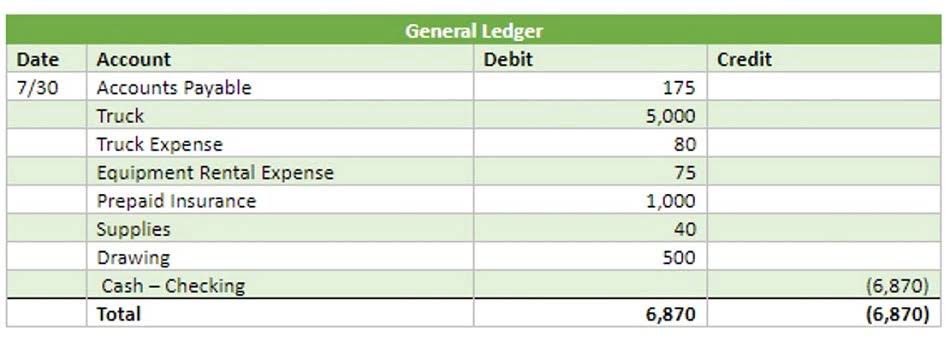
Liabilities in accounting are recorded as financial obligations, but these act as the most efficient resource for companies to fund capital expansion. In case of sudden requirements, a liability helps entities pay for operations and then return the finance as applicable to the lenders. In summary, other liabilities in accounting consist of obligations arising from leases and contingent liabilities, such as lease payments, warranty liabilities, and lawsuit liabilities. Proper recognition and classification of these liabilities are essential for providing accurate and clear financial information to stakeholders. As long as you haven’t made any mistakes in your bookkeeping, your liabilities should all be waiting for you on your balance sheet. If you’re doing it manually, you’ll just add up every liability in your general ledger and total it on your balance sheet.
Here is a list of some of the most common examples of non-current liabilities. Here is a list of some of the most common examples of current liabilities. Usually, you would receive some type of invoice from a vendor or organization to pay off any debts. Any money that you owe would get considered as a liability. And it would stay as a liability until the invoice gets paid off. An asset is anything a company owns of financial value, such as revenue (which is recorded under accounts receivable).